
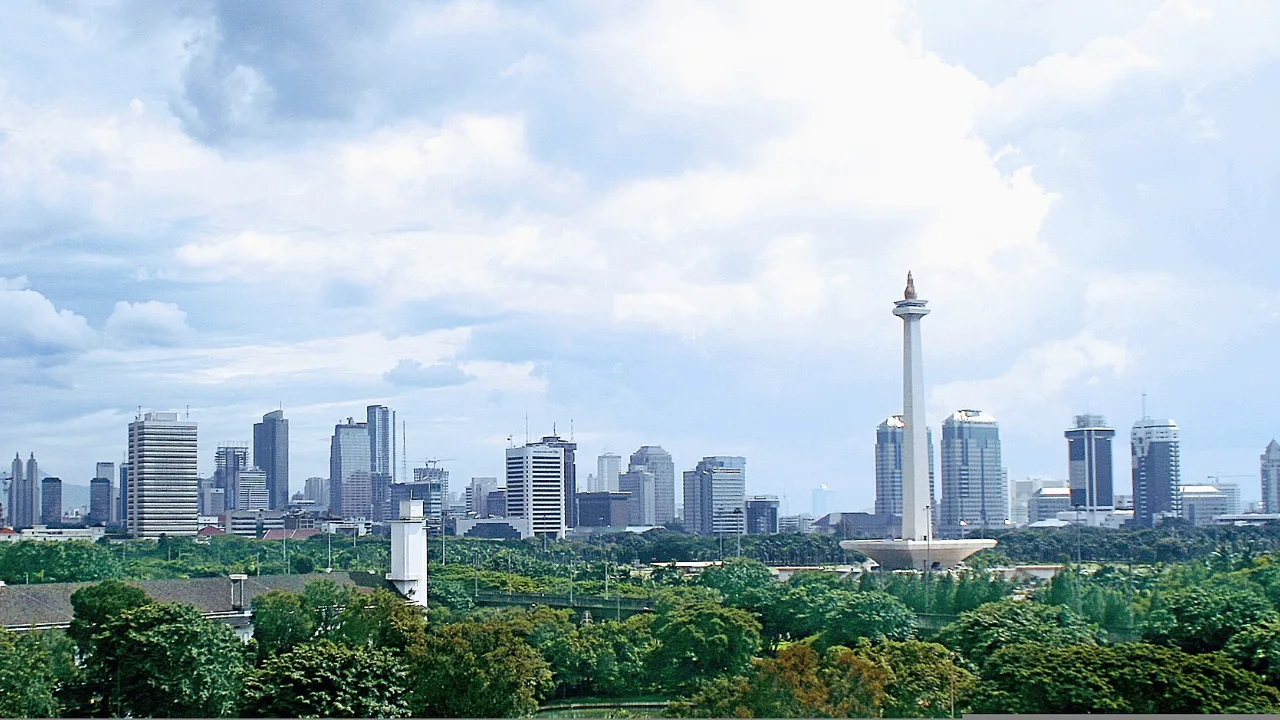
Jakarta travel guide: monuments, museums and markets
Jakarta is best from May to September, and 3 days covers the main sights. The airport train, buses and taxis link the airport to the centre, but traffic can be heavy.
Photo: Gunawan Kartapranata, CC BY-SA 3.0, Wikimedia Commons
Best time to visit
May to September is the dry season, with less rain and slightly lower humidity. It is the most comfortable time for sightseeing.
Rain is common from November to March and can bring flooding in some areas. It is hot and humid all year, so plan outdoor sights for the morning.
How many days you need
Three days cover Monas, the National Museum, Istiqlal Mosque, Kota Tua and a visit to a mall or a neighbourhood such as Kemang. Sights are far apart, so plan by area.
A fourth day suits Bogor Botanical Gardens, which is about an hour by commuter train. Traffic is heavy, so a day trip by road can take longer.
Getting from the airport to the centre
Soekarno-Hatta International Airport (CGK) lies west of the city in Tangerang. The airport train runs to central Jakarta, and airport buses serve several parts of the city.
Taxis and taxi apps are also available. Use the official taxi desks or a booked car. Traffic can make the trip to the centre long, so allow extra time.
Getting around
Jakarta has an MRT line from the south to the central business district, TransJakarta bus routes, commuter trains and LRT lines. Taxi apps are widely used and are often the simplest choice.
Traffic is heavy at rush hours, so avoid travelling between the areas then. Walking is hard in many parts because of heat and a lack of pavements.
Where to stay
Central Jakarta, including Menteng, is close to Monas and the museums. Sudirman and Thamrin have many hotels and good access to the MRT.
Kota Tua suits those who want to be near the Old Town, though it is quieter at night. South Jakarta offers cafes and nightlife.
What to book in advance
Book day trips and drivers for the weekend, as many locals travel then. A pre-booked airport transfer helps after a long flight.
Check ticket rules and opening days for Monas and the museums before you go. Some sights close on certain days of the week.
Common mistakes to avoid
Do not plan too many sights in one day. Traffic can turn a short distance into a long ride.
Do not use unmarked taxis or accept offers from drivers in the arrivals hall. Use a taxi app or an official desk.
Do not dress in short clothes at mosques. Do not drink tap water, and do not forget a rain jacket.
Money, tipping and practical notes
The currency is the Indonesian rupiah. Cards are widely accepted in malls and hotels, but street stalls often need cash. A service charge is often added in restaurants, and tipping is optional.
Plug types C and F are used, at 230 volts. Drink bottled or filtered water. Check official government sources for entry and visa rules.
Facts on this page were last checked in November 2026. Routes, rules and opening days change, so confirm important details with the official source before you travel.
Frequently asked questions
How many days do you need in Jakarta?
Three days cover Monas, the museums, Istiqlal Mosque and Kota Tua. Add a day for Bogor Botanical Gardens.
How do I get from Jakarta Airport to the centre?
Take the airport train, an airport bus, a taxi or a pre-booked car. Allow extra time, as traffic can be heavy.
What currency does Indonesia use?
The Indonesian rupiah. Cards work in malls and hotels, but street stalls and small shops often take cash only.
When is the best time to visit Jakarta?
May to September is drier and more comfortable. Rain is common from November to March.
Is Jakarta safe for tourists to get around?
Use taxi apps, keep bags close in crowds and avoid unmarked taxis. Check official government travel advice.
Is Jakarta walkable?
Not much. Pavements are limited and it is hot, so use the MRT, buses or taxi apps between areas.