
Marseille travel guide: what to know before you go
Marseille is best from April to June and September to October, and three days cover the main sights. A shuttle bus links the airport with Saint-Charles station.
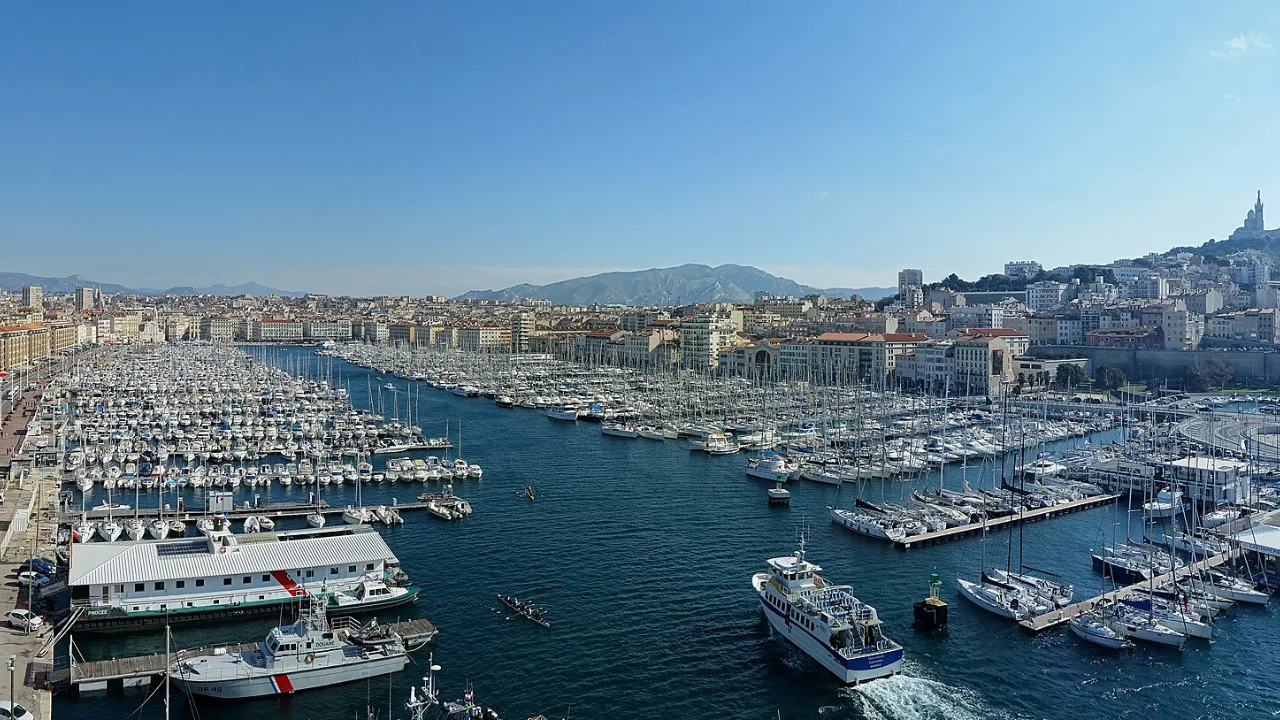
Photo: Velvet, CC BY-SA 4.0, Wikimedia Commons
Best time to visit
April to June and September to October have warm weather and are good for walking and boat trips. July and August are hot and crowded. Winters are mild but can be windy.
The mistral, a strong cold wind, can blow at any time of the year. It can cancel boat trips, so keep your plans flexible.
How many days you need
Two days cover the Old Port, Le Panier, the MuCEM and Notre-Dame de la Garde. A third day adds the Château d’If and the Frioul islands.
A fourth day suits the Calanques, Cassis or Aix-en-Provence.
Getting from the airport to the centre
Marseille Provence Airport (MRS) is north-west of the city, at Marignane. A shuttle bus runs from the airport to Saint-Charles station in about 25 minutes. From there, the metro goes to the Old Port.
Taxis and pre-booked transfers are also available. Use the official taxi rank or a ride-hailing app, and do not accept offers from drivers who approach you in the hall.
Getting around
The city has two metro lines, trams and buses, run by RTM. Buy a ticket at a station machine or in the app, and validate it when you board.
The Old Port, Le Panier and the MuCEM are close together on foot. Use bus 60 or a taxi for Notre-Dame de la Garde, and a boat for the islands.
Where to stay
The Old Port is central and lively but noisy at night. Le Panier is atmospheric, with small guesthouses and steep lanes.
Joliette is modern and near the port. Prado and the Corniche suit visitors who want the sea and beaches.
What to book in advance
Book boats to the Château d’If and the Calanques ahead in summer, when places fill up. Check what is included in the fortress ticket.
Book restaurants for bouillabaisse, as it is often served by reservation. Check closing days for the MuCEM and other museums.
Common mistakes to avoid
Do not plan a boat trip without a back-up. Wind can cancel sailings, so leave one spare day if you can.
Do not go on a Calanques hike in midsummer without checking access. Trails can close for fire risk.
Do not leave bags or phones unattended at the Old Port, the station or on the beach.
Money, tipping and practical notes
The currency is the euro. Cards are widely accepted, but carry some cash for markets. Service is normally included, and a small extra tip is optional.
Plug types C and E are used, at 230 volts. A small tourist tax applies to hotel stays. France is in the Schengen area. Check official government sources for entry rules.
Facts on this page were last checked in November 2026. Routes, rules and opening days change, so confirm important details with the official source before you travel.
Facts on this page were last checked in November 2026. Routes, rules and opening days change, so confirm important details with the official source before you travel.
Frequently asked questions
How many days do you need in Marseille?
Two or three days cover the main sights. Add a day for the Calanques, Cassis or Aix-en-Provence.
How do I get from Marseille airport to the centre?
Take the shuttle bus to Saint-Charles station, a taxi or a pre-booked transfer. The bus takes about 25 minutes.
What currency does Marseille use?
The euro. Cards are widely accepted, but carry some cash for markets and small shops.
When is the best time to visit Marseille?
April to June and September to October. Summer is hot and busy.
How do I get to the Château d’If?
Take a boat from the Old Port. The crossing takes about 20 minutes, and sailings depend on the weather.
Is Marseille walkable?
The Old Port, Le Panier and the MuCEM are walkable. Use the metro, buses or taxis for other areas.